The Early-Autumn Supper That Starts at the Market
Early autumn is a generous moment for simple cooking. Summer vegetables have not entirely disappeared, but cooler evenings make roasting, warm grains and slow dinners feel appealing again. A market stall at this time of year might hold tomatoes beside squash, herbs next to sturdy greens, and late peppers alongside the first roots of the season.
That overlap is useful because it encourages a supper built around what looks good rather than a long shopping list. The method is flexible: choose several vegetables with different textures, add one grain or piece of bread, make a sharp dressing and cook only as much as each ingredient needs.
Choose by contrast
Instead of buying five similar vegetables, look for contrast. Pick something sweet and soft when cooked, such as squash or peppers; something crisp, such as radishes or fennel; something green and leafy; and something bright, like tomatoes or fresh herbs. The plate becomes interesting before any complicated technique is involved.
If there is a vegetable you do not recognize, ask the seller how they like to cook it. Market advice is often refreshingly practical: roast it, slice it thinly, keep the leaves, do not peel it, or add it at the very end. One useful sentence can be more helpful than searching through dozens of recipes while standing in the aisle.
Let the oven handle the slow part
Start with the vegetables that benefit from time and heat. Cut squash, onions or roots into generous pieces, coat them lightly with oil and season with salt. Roast them until the edges darken and the centres are tender. The exact timing matters less than the visual cues: browning, softness and a little caramelization around the tray.
While they cook, prepare everything else. This is one reason tray-based suppers feel calm. The oven creates a stretch of time for washing herbs, slicing crisp vegetables, warming bread or cooking a small pan of grains.
Build one sharp dressing
A simple dressing connects vegetables with very different textures. Start with an acidic ingredient such as lemon juice or vinegar, add olive oil, salt and black pepper, then taste. Mustard, chopped herbs, grated garlic or a spoonful of yoghurt can take it in different directions, but the basic idea is balance rather than complexity.
Keep the dressing brighter than seems necessary on its own. Once it meets sweet roasted vegetables, grains and bread, that extra acidity keeps the whole plate lively.
Do not cook everything
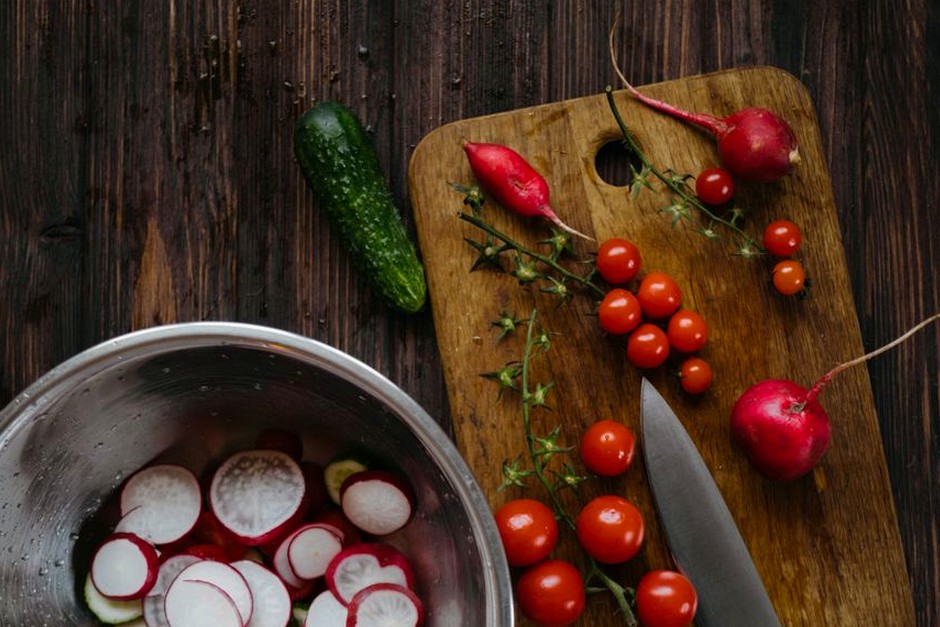
A market supper is better when some ingredients remain raw. Thin slices of radish, cucumber, fennel or fresh tomato bring temperature and crunch to the plate. Herbs can be torn at the last moment. Leaves only need enough dressing to soften slightly.
This mix of hot and cool ingredients also makes the meal feel less formal. There is no need to coordinate four pans so that everything finishes at the same second. The warm elements can wait while the fresh elements are assembled.
Serve it in the middle of the table
Rather than plating identical portions, place the roasted vegetables on one dish, the dressed greens on another, and bread or grains beside them. Add cheese, toasted seeds or beans if you want something more substantial. Everyone can build a plate according to appetite.
Leftovers are easy to use the next day. Roasted vegetables can go into a sandwich, grains can become a lunch salad, and extra dressing usually improves after a night in the fridge. A supper that begins with seasonal produce often has a useful second life.
The pleasure of this kind of meal is that it is guided by attention rather than precision. You notice what is abundant, what smells good, what has the best colour and what needs to be eaten first. The market provides the structure; the kitchen simply gives those ingredients enough heat, seasoning and space to taste like themselves.